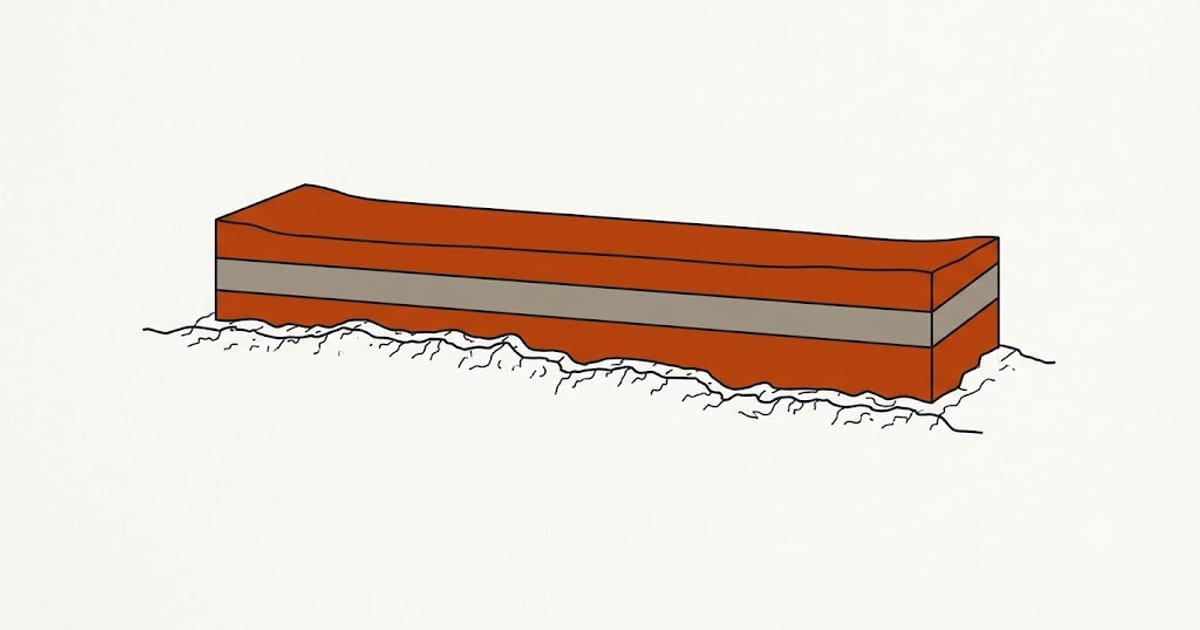
Primer is not thinner paint. It does three jobs finish paint does not: seal a porous surface, bond to a difficult one, and block something from coming through.
Yes — new drywall
Not for adhesion. Because paper and joint compound absorb at different rates.
Paint straight onto unprimed board dries at different sheens over the joints and over the field, and every taped seam shows through the finish in raking light. It is called joint banding and no number of finish coats fixes it, because each coat repeats the same difference.
A gallon of drywall primer-sealer costs less than the extra finish coat people apply trying to solve it — and the coat count is where painting costs actually live.
Yes — bare wood
Wood absorbs unevenly and knots bleed tannin through water-based paint as brown patches, sometimes months later.
Use a stain-blocking primer — shellac-based for knots specifically, oil or a good acrylic for general bare wood. Spot-prime the knots with shellac even if the rest gets acrylic.
Yes — masonry, stucco and new plaster
Highly porous, and alkaline. Fresh masonry and plaster will burn through a topcoat as patchy discolouration months later — saponification, and it is why a masonry primer exists.
Bare brick drinks about 125 ft² per gallon because the mortar joints take more than the brick does.
Yes — stains, smoke and water damage
Water stains, smoke and nicotine bleed through water-based paint indefinitely. A shellac or oil-based stain blocker is the only reliable answer, and it needs to cover the stain fully, not be feathered.
Painting over a water stain without blocking it is a job that comes back.
Yes — a big colour change
Going light over dark is not a coverage problem; the paint spreads normally. It is a coats problem — three finish coats, or two over a primer tinted toward the new colour.
The tinted primer route is almost always cheaper and faster, because primer costs less than finish paint and covers in one coat. The gallon arithmetic is here.
No — sound painted walls in the same colour family
A wall in good condition, previously painted, going a similar colour: spot-prime the repairs and skip the rest.
Filled nail holes and patched areas are porous and will flash through as dull spots. A dab of primer on each is a five-minute job and it is all that is needed.
Self-priming paint
"Paint and primer in one" is thicker paint with better binders. On a sound previously painted wall it genuinely works and saves a coat.
On any surface in the yes list above it does not, because it is still paint — and the spread rate is the surface's, not the product's — it does not block stains, it does not seal alkaline masonry, and it does not solve joint banding.
Read the list, not the tin.
How much primer
Primer spreads roughly the same as paint on the same surface, so 375 ft² per gallon on drywall, less on porous surfaces.
On new drywall or bare wood, expect primer to spread less than the finish coats that follow, because the surface is at its most absorbent.
Sanding between coats
Primer on wood raises the grain. A light sand with 220 grit before the finish coat is the difference between a trim job that feels smooth and one that feels like sandpaper — and it takes minutes.
On drywall, a light pole-sand of the primed surface knocks off the fuzz raised by the roller, and it is the step that separates a good wall from a very good one.