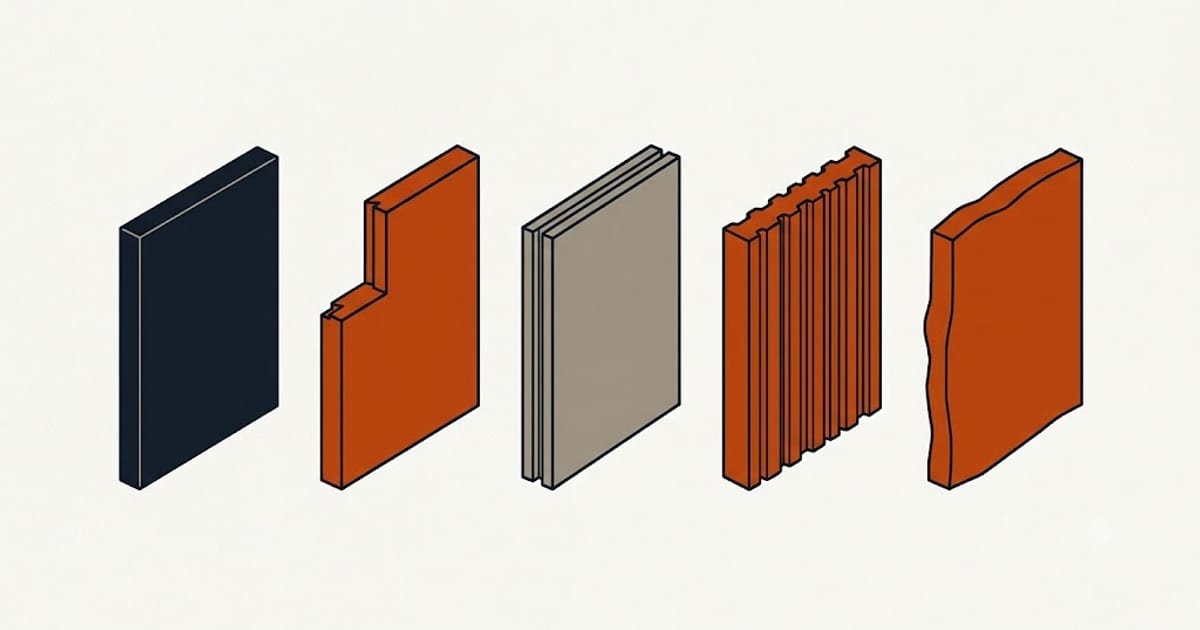
Exterior paint quantities are decided by texture, and the gap between surfaces is far wider than the gap between brands.
| Siding | ft² per gallon |
|---|---|
| Smooth fibre cement | 350 |
| Smooth previously painted wood | 350 |
| Lap siding | 275 |
| Grooved / shiplap | 225 |
| T1-11 plywood | 200 |
| Cedar shingle | 180 |
| Stucco | 160 |
| Bare brick | 125 |
Lap siding takes less than smooth board because every board has an underside the roller has to reach. Stucco and brick take far less because the actual surface area is several times the flat area.
Working out the area
wall area = perimeter × average wall height minus windows and doors
A house with a 140 ft perimeter and 10 ft average height is 1,400 ft². Deduct 200 ft² of windows and doors and you have 1,200 ft².
On lap siding at 275 ft²/gallon: 4.4 gallons per coat. Two coats, with the second spreading about 15% further: around 8.2 gallons → buy 9.
Gallons by perimeter, wall height, siding type, coats and window count does this for every combination.
Gables add area that a simple perimeter × height misses. A gable is a triangle: ½ × width × rise. On a house with two gables at 30 ft wide and 8 ft rise, that is 240 ft² — nearly a gallon, and easy to forget.
Two weather limits matter more than the count
Surface temperature must stay above about 10 °C (50 °F) for the whole cure, not just while you are painting. A warm afternoon followed by a cold night gives a film that never properly coalesces, and it comes off in sheets the following spring. Some paints are rated to 2 °C — read the tin, and check the overnight forecast, not the daytime one.
Dew point matters as much as rain. Early-morning painting on a clear autumn day fails constantly for exactly this reason: the siding is wet with dew you cannot see. Wait until the surface is genuinely dry, which is usually mid-morning.
Wash first, then wait
Paint over chalky or dirty siding fails at the interface however good the paint is. Chalking — the powdery residue on old paint — must come off, and a hose is not enough.
Pressure-washed wood needs two or three dry days. A moisture meter reading under 15% is the honest test; "it looks dry" is not, because the surface dries hours before the wood behind it does.
Back-roll anything you spray
Spraying lays paint on the surface. Back-rolling works it into the grain and the grooves. On textured siding that is the difference between six years and twelve.
Spraying alone on T1-11 or shingle looks fine on day one and fails first at the bottom of every groove.
Primer where the surface is porous
Brick, stucco and bare T1-11 need it. On masonry a dedicated primer also seals the alkalinity that otherwise burns through the topcoat as patchy discolouration months later.
On sound previously painted siding, spot-prime the repairs and skip the rest. The full list of when primer is structural to the job applies outdoors as well as in.
Trim, soffit and fascia are separate
They are linear-foot work with cutting-in, and on most houses they are a different colour, which means a second product, a second setup and masking.
Budget them separately. On a typical house they are 20–30% of the exterior paint job's labor on maybe 10% of the area — the same imbalance as interior trim.